

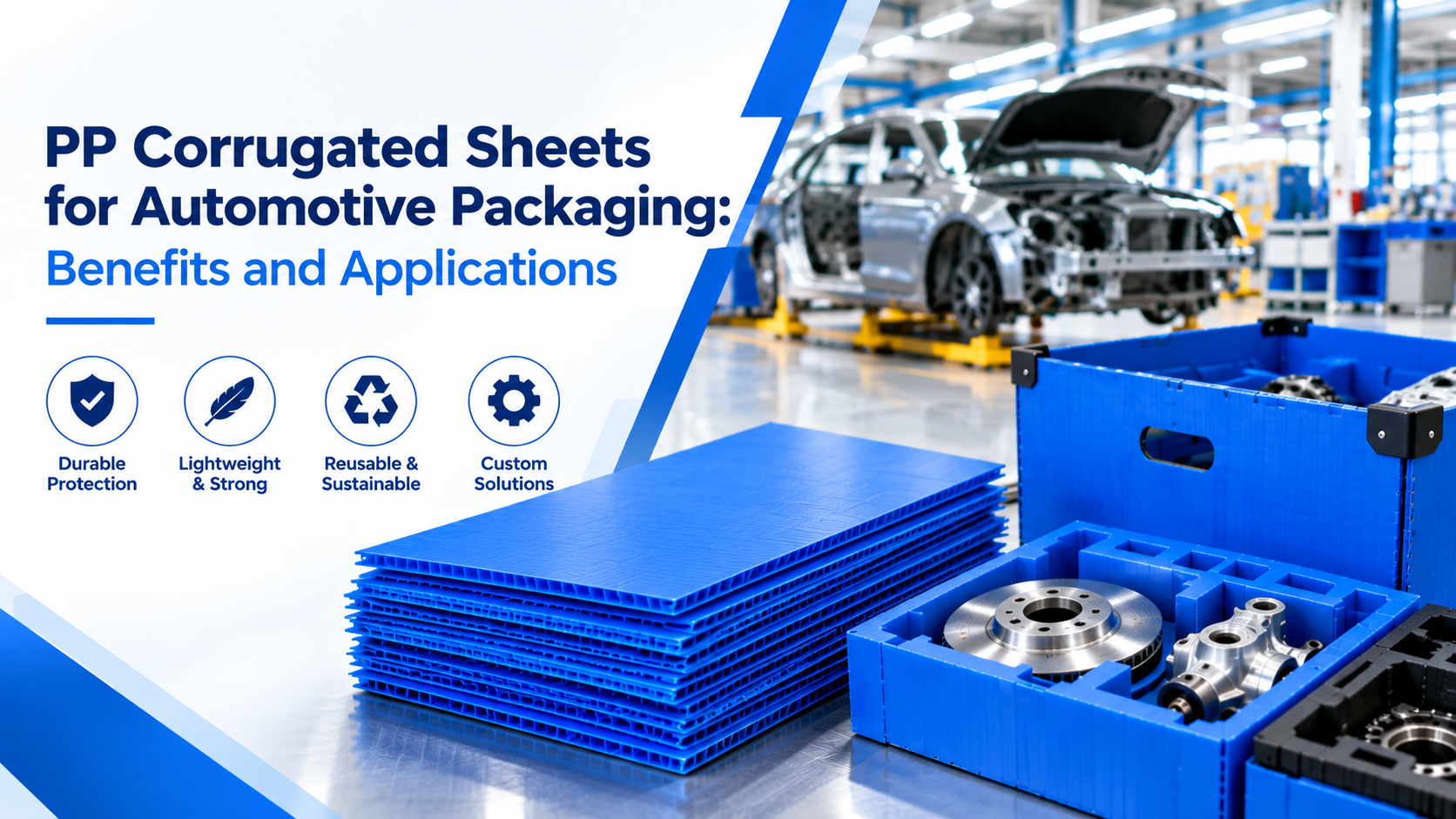
PP Corrugated Sheets for Automotive Packaging: Benefits & Applications
PP corrugated sheets for automotive packaging offer a lightweight, durable, and reusable solution for protecting automotive components during storage, handling, and transportation. These sheets are widely used to manufacture protective layer pads, dividers, custom inserts, and returnable packaging systems. For automotive manufacturers and suppliers, they help improve packaging efficiency while providing reliable protection for valuable components.
Automotive manufacturing involves numerous components that move between suppliers, production facilities, warehouses and distribution centres. During these stages, products may be exposed to vibration, friction, dust and moisture.
Effective packaging helps businesses maintain product quality throughout the supply chain.
Some important packaging requirements in the automotive industry include:
- Component protection: Preventing scratches, surface damage and unnecessary contact between parts.
- Safe transportation: Keeping components organised and reducing movement during transportation.
- Storage efficiency: Making it easier to stack, separate and organise automotive parts.
- Handling convenience: Providing packaging that is easy for workers to handle and manage.
- Packaging consistency: Maintaining standardised packaging for regular shipments and production processes.
Traditional packaging materials may not meet every requirement. Businesses often consider alternative materials that offer a combination of durability, flexibility and ease of handling.
What Are PP Corrugated Sheets?
PP corrugated sheets are lightweight plastic sheets manufactured from polypropylene. Their fluted internal structure is positioned between two flat outer layers, providing rigidity without the weight of a solid plastic sheet.
They are commonly used in industrial packaging, protective applications, signage and storage solutions.
Depending on their specifications, PP corrugated sheets can be cut, folded and fabricated into different packaging formats. This makes them useful for businesses that need packaging tailored to particular products.
For automotive applications, they may be used as protective separators, liners, dividers and packaging inserts.
Key Benefits of PP Corrugated Sheets for Automotive Packaging
PP corrugated sheets are also known as sunpack sheets in some markets. The term is often used for lightweight corrugated plastic sheets used in packaging and protective applications.
When selecting these sheets, the name of the product is only one part of the decision. The actual specification matters more. Sheet thickness, size, strength, and the way the sheet will be used all affect the final result.
A sheet used as a simple separator does not necessarily need the same specification as a sheet used to make a reusable industrial container.
This is why businesses should consider the application before ordering large quantities. A supplier can recommend a suitable option after understanding what the sheet needs to do.
1. Lightweight and Easy to Handle
Weight is an important consideration in automotive logistics. Heavy packaging materials can increase handling effort and add to the overall weight of shipments.
PP corrugated sheets are relatively lightweight, making them easier to handle, cut and assemble into packaging structures. Their lightweight nature can also help businesses manage packaging weight, depending on the application.
2. Protection Against Moisture
Automotive components may be stored or transported in environments where moisture is a concern. Certain packaging materials can absorb water, potentially affecting their condition.
Polypropylene is naturally moisture-resistant. PP corrugated sheets can therefore be useful for packaging applications where resistance to water and humidity is required.
However, they should not be considered a substitute for specialised waterproof packaging where complete sealing is necessary.
3. Customisable Packaging Designs
Automotive components come in different shapes and sizes. A standard packaging solution may not provide adequate protection for every part.
PP corrugated sheets can be fabricated into various packaging formats, including:
- Protective dividers
- Layer pads
- Storage boxes
- Component separators
- Protective liners
- Custom packaging inserts
These options help businesses develop packaging suited to their individual component dimensions and handling requirements.
4. Reusability and Durability
Some automotive supply chains use reusable packaging to transport components repeatedly between manufacturing facilities and suppliers.
When appropriately designed and maintained, PP corrugated packaging can be reused for suitable applications. Its durability can help reduce the need for frequent replacement compared with certain single-use packaging options.
The actual number of reuse cycles depends on sheet thickness, load conditions, handling practices and storage environments.
5. Easy to Clean and Maintain
Packaging cleanliness is important in industries where components need to remain free from dust, dirt and other contaminants.
PP corrugated sheets have non-absorbent plastic surfaces that are generally easier to wipe clean than absorbent paper-based materials. This can make them useful in certain reusable packaging systems.
Cleaning methods should always be suitable for the particular sheet and its intended application.
Applications of PP Corrugated Sheets in Automotive Packaging Packaging for Automotive Spare Parts
Automotive spare parts vary significantly in size, shape and material. PP corrugated sheets can be used as protective layers and dividers to help separate individual parts and minimise contact during storage and transportation.
Protective Packaging for Interior Components
Interior components, such as plastic trims and certain dashboard parts, may require protection against scratches and surface marks.
Suitable PP corrugated dividers and liners can help separate these components during handling. Additional cushioning may be necessary for delicate or high-value parts.
Packaging for Automotive Electrical Components
Some automotive electrical components require careful handling and protection against dust and physical damage.
PP corrugated packaging can provide a physical separation layer and help organise components. However, ordinary PP corrugated sheets are not necessarily antistatic or electrically conductive. Sensitive electronic components may require specially specified packaging.
Storage and Transportation of Automotive Components
Manufacturers and suppliers frequently need to move components between production lines and storage areas.
PP corrugated sheets can be fabricated into reusable boxes, separators and layer pads to help organise components and simplify handling. Their suitability depends on the component weight, packaging design and transportation conditions.
How to Choose the Right PP Corrugated Sheets for Automotive Packaging
Selecting an appropriate sheet requires more than simply choosing a material. Businesses should consider the product, handling conditions and packaging design.
Sheet thickness: Choose an appropriate thickness based on the level of rigidity and support required. Heavier components may need a different design from lightweight parts.
Sheet dimensions: Packaging should fit the automotive component properly to reduce unnecessary movement and wasted space.
Surface requirements: Consider whether the components are sensitive to scratches, friction or contamination. Additional protective layers may be necessary.
Environmental conditions: Evaluate exposure to humidity, temperature variations and other environmental factors.
Reusability: If packaging will be reused, consider the expected handling frequency, cleaning requirements and durability of the finished design.
Conclusion
Selecting an appropriate sheet requires more than simply choosing a material. Businesses should consider the product, handling conditions and packaging design.
Sheet thickness: Choose an appropriate thickness based on the level of rigidity and support required. Heavier components may need a different design from lightweight parts.
Sheet dimensions: Packaging should fit the automotive component properly to reduce unnecessary movement and wasted space.
Surface requirements: Consider whether the components are sensitive to scratches, friction or contamination. Additional protective layers may be necessary.
Environmental conditions: Evaluate exposure to humidity, temperature variations and other environmental factors.
Reusability: If packaging will be reused, consider the expected handling frequency, cleaning requirements and durability of the finished design.